

How To Repair Brick Mortar Steps
How to Repair Mortar Joints
Restore aging mortar joints with a chisel, a grinder and a lot of patience
 Time
Time
Multiple Days
 Complication
Beginner
 Price
Price
Varies
Introduction
Learn the tools and techniques used for tuckpointing one-time masonry walls and chimneys. Observe how to restore cracked and worn mortar joints, how to cutting out old mortar and how to pack new mortar in neatly and cleanly.
Tools Required
Materials Required
- Mortar mix
Repair Mortar Joints
Brick is ane of the nigh prized exteriors for homes because it'south attractive and easy to maintain. Nevertheless over the years, water, ice and seasonal expansion and contraction all assault the solid mass of a brick wall at its virtually elastic (and weakest) signal: the mortar joints.
Mortar joints deteriorate wherever water can soak them—under windows and walls, around chimneys, behind downspouts, at ground level and at any exposed wall top.
Repairing eroding and cracked mortar joints is called pointing, repointing or tuckpointing. We'll show you the proper tools and techniques to repair and restore cracked and worn-away mortar joints to make them solid, durable and skillful looking. To proceed them that way for the long run, you accept to finish water from getting into your bricks and foundation.
Repointing brick is ho-hum, painstaking work that requires few special skills merely a lot of patience. Using the steps we show, you lot can expect to repoint about 20 sq. ft. of brick piece of work a 24-hour interval. However, if y'all blitz and do careless piece of work on a highly visible area, the repointing brickwork volition stick out similar graffiti. Brick is durable; bad results will bother y'all for a long time! If you don't have repointing brick experience, consider hiring a pro for:
- Larger-scale pointing jobs, such as a whole wall that needs repair.
- Chimney and wall repair requiring setting upwardly and moving scaffolding.
- Areas with a lot of loose or missing brick requiring rebuilding walls or corners.
- Color-matching new mortar to existing mortar in highly visible areas.
Read on to learn how to repoint brick.
Project step-by-step (9)
Step 1
Use an Angle Grinder for Larger, Harder Repointing Brick Jobs
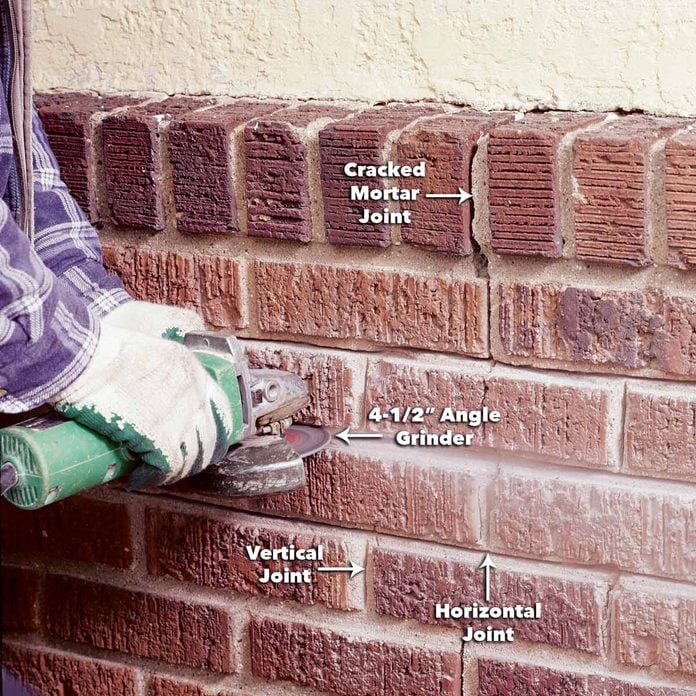
Cleaning out former mortar joints requires basic tools: hammer, flat utility chisel, safety glasses, dust mask and whisk broom. Filling the cleaned-out joints requires masonry tools: brick trowel, 3/8-in. pointing trowel, a special tool for contouring the joints and waterproof gloves.
If you do tackle larger jobs or encounter hard mortar that can't exist easily chiseled out, we recommend that you lot rent or purchase an bending grinder fitted with a diamond blade. Select a grinder with a 4-1/ii in. blade diameter; larger grinders are harder to control and cutting the mortar too deep. To begin, Cutting grooves three/iv to 1 in. deep in croaky or deteriorating mortar using a 4-1/2 in. angle grinder fitted with a diamond blade. Button the bract into the joint until the grinder head contacts the brick, and make a single laissez passer along the eye of the joints.
Step 2
Fleck Out Loose Mortar
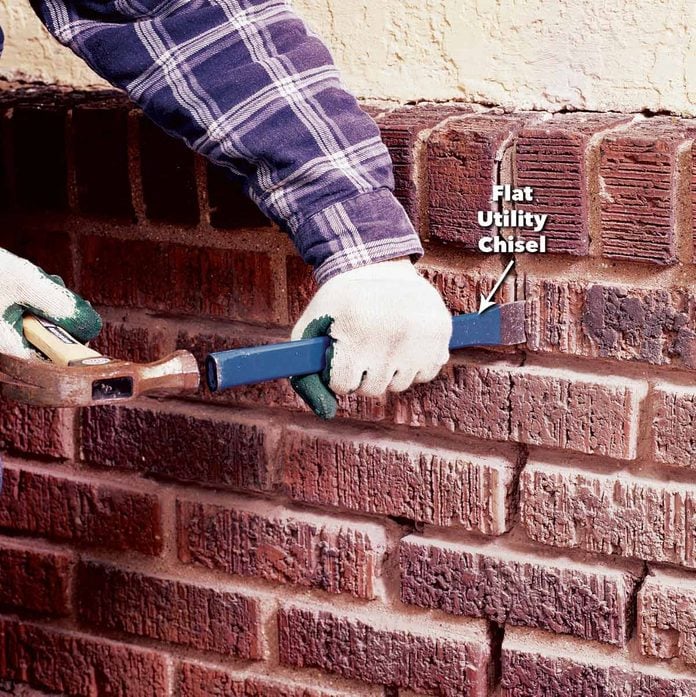
Break out old mortar using a hammer and cold chisel or a flat utility chisel that's narrow plenty to fit into the joints. Position a flat utility chisel at the edge of the brick and bulldoze it toward the relief cut to fracture and remove the mortar. Wear safety spectacles and a dust mask and remove iii/4 to 1 in. of old mortar (more if needed) until you achieve a solid base for bonding the new mortar. If the mortar is so soft that the bricks are loosening up, you'll have to remove and properly reset them. If the cracked mortar is harder, make a relief cut downwards the center of the mortar joint using the pointed edge of the chisel and then gently chip out the mortar (brick grout) that contacts the brick.
If the removal work is going actually slowly, apply an angle grinder to make the relief cuts. Exercise care here; the grinder tin hands nick and scrap the bricks, then don't apply it to clean out the mortar contacting the brick. To avert nicking the bricks, cut the vertical joints before cutting the horizontal joints.

Pace 3
Clean the Joints

One time the former mortar is removed, dust out the brick crenel joints using a whisk broom or compressed air, Prepare the joints to receive new mortar by misting them lightly with a garden hose sprayer.
Step 4
Mix the Mortar
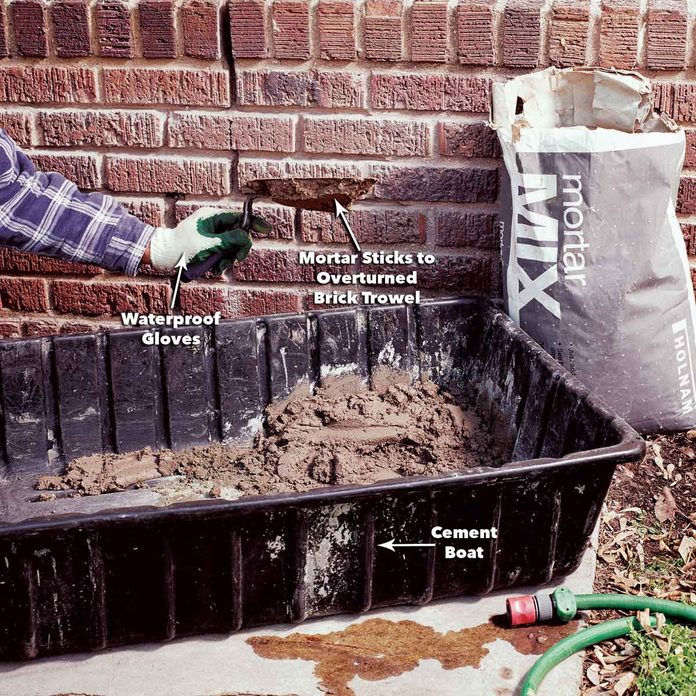
Using but the amount of water specified past the manufacturer, gradually add together in the water and mix the mortar in a cement boat until it's the consistency of peanut butter and sticky enough to cling to an overturned trowel. It should be stiff but not crumbly. Allow the mortar to "rest" for 10 minutes as it absorbs the water, then remix it using your brick trowel. Don't effort to revive mortar that's drying out by adding more than water to it. Mix a fresh batch instead.
Footstep v
Fill the Joints with Mortar
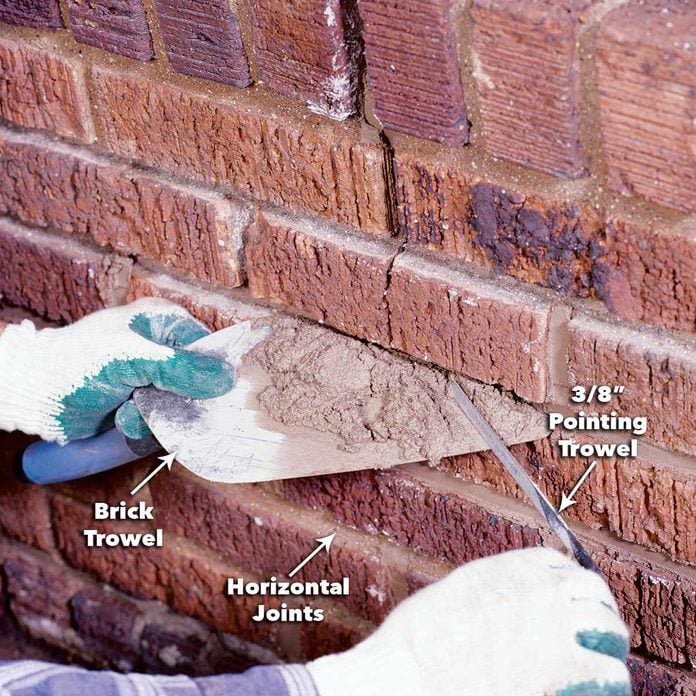
The basic steps for how to mortar brick start like this: Load mortar onto an overturned brick trowel, hold the trowel under the horizontal joint—tight to the brick—and sweep one/4-in. slivers of mortar into the crenel using a 3/8-in. wide pointing trowel. Fill the horizontal joints showtime. Avoid getting mortar on the brick face.
Follow these additional tips for filling mortar joints:
- Pack the mortar tightly with no voids for the strongest, virtually water-resistant joints.
- Fill up deeper joints (those greater than three/iv in.) in two stages. Allow the first layer to partially harden (until a thumbprint barely leaves an indentation) before adding the second layer.
- In hot weather, piece of work in shaded areas first (if possible) then the sun won't dry the mortar too fast. Mix smaller batches of mortar.
- Don't work in temperatures below 40 degrees F.
Step vi
Fill up the Vertical Joints Last
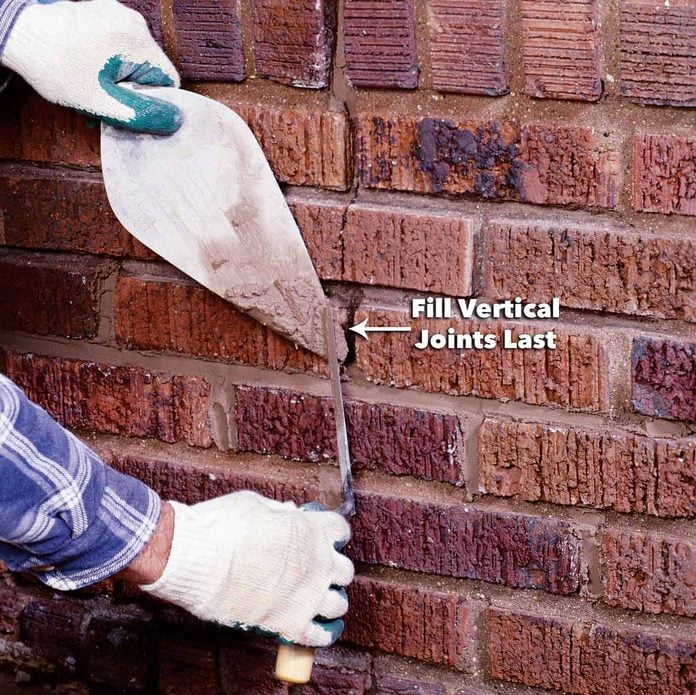
Load smaller amounts of mortar onto the back of the brick trowel, hold the trowel tip along the vertical joints and above the horizontal joints—tight to the brick—then sweep and pack the mortar into the cavity using the pointing trowel.
Step 7
Effigy A: Common Mortar Joint Profiles
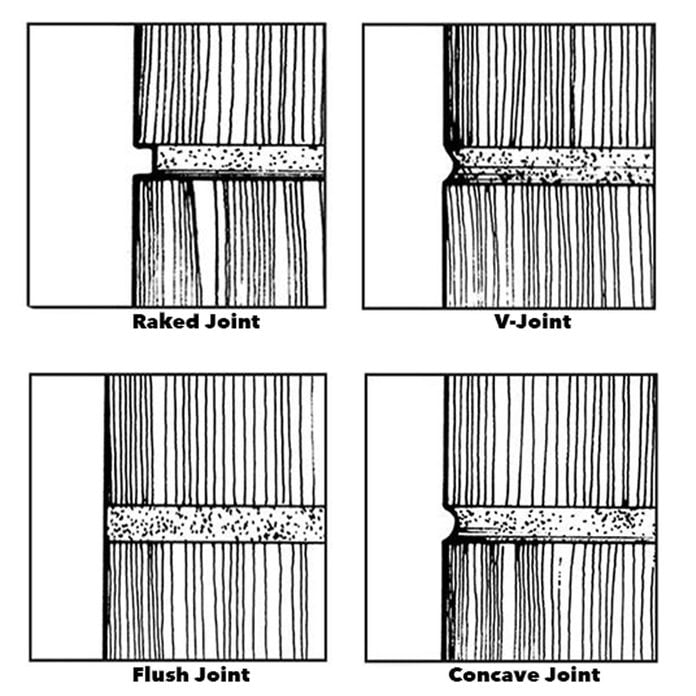
Before finishing the mortar joint, decide which articulation matches your existing joints using Figure A above. Next, buy the mortar finishing tool you need to match the contour and depth of your existing mortar joints. We recommend that you repoint brick sills and other horizontal brick surfaces (ledges, wall tops, etc.) with flush joints to promote drainage—regardless of the type of mortar joint in your vertical walls. Allow the mortar to cure to "thumbprint" hardness before you finish the joint. Shape the vertical joints before working the long horizontal joints. These are the most common mortar joint profiles:
- Raked joint: Formed past removing mortar to one/4 in. deep with a raking block.
- V-Joint: Formed by a brick jointer, it has a concave, "V" look.
- Flush articulation: Formed by cutting off the mortar with the border of a brick trowel.
- Concave articulation: Formed past the curved stop of a brick jointer.
Step viii
Rake the Joints
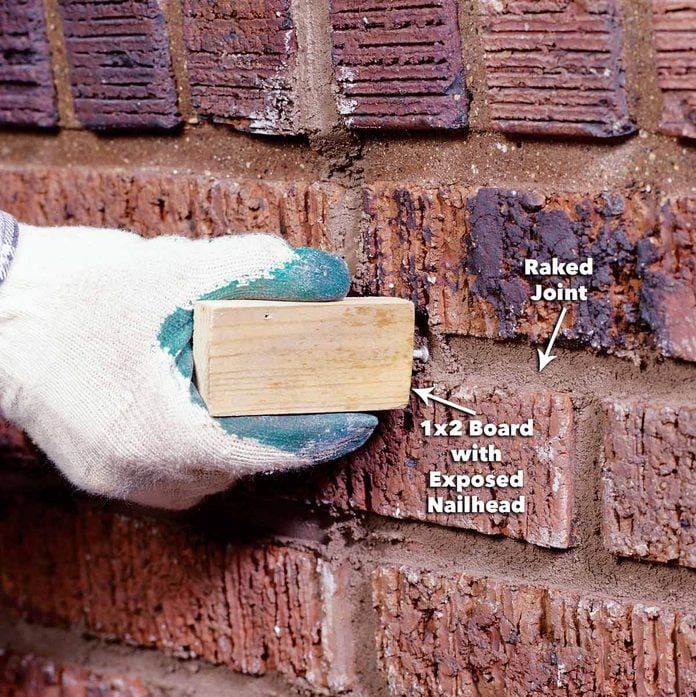
For this projection, we used a raked joint mortar profile. To brand your own raked joint tool, drive a 6d box smash into a curt 1x2 lath so that it matches the depth of the existing joints. To "rake" joints, concur the board perpendicular to the bricks and motion it dorsum and forth, starting time along the vertical joints and so the horizontal joints. Other articulation profiles require other shaping tools.
Step 9
Make clean the Bricks
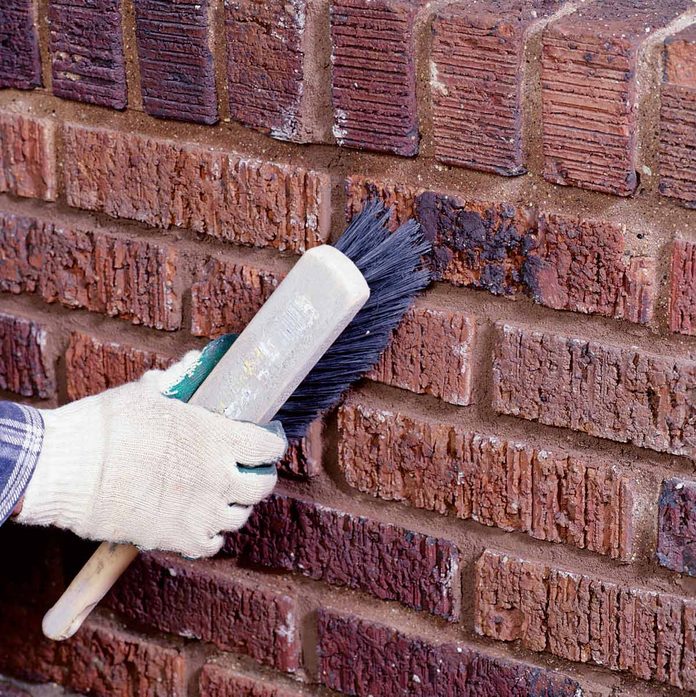
Utilise a soft-bristle brush to remove mortar chunks on the brick confront before they harden and to sweep loose mortar from the finished joints. The brush keeps the mortar from smearing. If yous exercise smear mortar onto the brick, yous'll have to go back later on and use a chemical cleaner. Prevent water from entering and dissentious your brickwork by applying colour-matched polyurethane caulk where stucco, wood and other materials meet brick. Mist the new mortar twice a day for two days using a hand pump sprayer or a low-cal mist from a garden hose to help it harden.
Plus, check out How to Repair Broken Bricks.
Originally Published: June 26, 2022

Source: https://www.familyhandyman.com/project/how-to-repair-mortar-joints/
Posted by: sengerarte1978.blogspot.com
0 Response to "How To Repair Brick Mortar Steps"
Post a Comment